When you walk into a clothing store, you might spot it instantly: a flowy, structured piece that catches the light with every fold. That’s the pleated skirt—a wardrobe staple that blends elegance, versatility, and incredible craftsmanship. For decades, it has stayed relevant, not just for its style, but for the skill that goes into making each perfect crease. Today, we’re diving into the world of the pleated skirt: how it’s made, why its craft matters, and why it’s more than just a piece of clothing.
H2: What Makes a Pleated Skirt’s Craftsmanship So Special?
A pleated skirt looks simple at first glance. But behind those neat, repeating folds is hours of careful work. Let’s break down the steps that turn a flat piece of fabric into a stunning pleated skirt—and why each detail counts.
H3: Step 1: Choosing the Right Fabric for the Pleated Skirt
Not all fabrics work for a pleated skirt. The best ones need to hold their shape and move gracefully.
Designers often pick fabrics like polyester, silk, or crepe. Polyester is durable; it keeps pleats sharp even after washes. Silk adds a luxe, soft drape—perfect for formal pleated skirts. Crepe has a subtle texture that makes folds look richer.
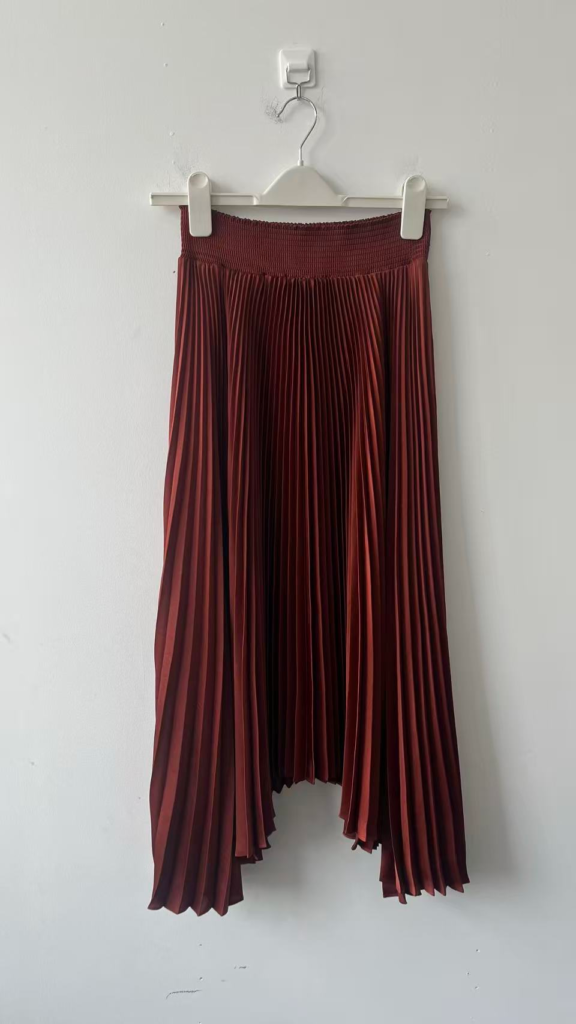
The fabric is first cut into the right length and width. For a midi pleated skirt (like the deep burgundy one in the photo), the fabric needs extra width to create full, flowing folds. A narrow piece would make the skirt look flat, not full.
H3: Step 2: The Art of Folding: How Pleats Are Made
This is where the craftsmanship shines. There are two main ways to create pleats for a pleated skirt:
- Hand-pleating: For high-end pieces, artisans fold the fabric by hand. They measure each pleat (usually 1–2 inches wide) and press it with a hot iron. This takes patience—one wrong fold can throw off the entire skirt.
- Machine-pleating: Most ready-to-wear pleated skirts use machines. But even machines need careful setup. The fabric is fed through a device that folds and presses it at precise intervals. The machine then uses heat or chemicals to “set” the pleats, so they don’t fall out.
For the burgundy skirt in the photo, the pleats are micro-pleats—small, tight folds that give it a structured yet light look. Each fold is identical, which takes precise calibration (whether by hand or machine).
H3: Step 3: Finishing Touches: Waistbands and Hemlines
A great pleated skirt isn’t just about the folds—it’s about the details.
The waistband (like the ruched one on the burgundy skirt) needs to fit snugly without pulling the pleats. Artisans often add elastic to the waistband so it stretches but keeps the pleats aligned.
The hemline is also key. For a flowing pleated skirt, the hem is cut slightly uneven (like the one in the photo) to add movement. A straight hem can look stiff, but a curved or asymmetrical hem makes the skirt swing when you walk.
H2: Why the Pleated Skirt’s Craftsmanship Matters
You might wonder: Why put so much work into a skirt’s folds? The answer is simple: craftsmanship makes the pleated skirt last.
A poorly made pleated skirt will lose its folds after a few wears. The fabric will bunch, and the shape will fade. But a well-crafted one? It stays sharp for years.
Take the burgundy pleated skirt in the photo. Its tight micro-pleats and ruched waistband are made to hold up. Even after multiple washes, the folds won’t flatten. That’s the difference between a “fast fashion” piece and a timeless one.
H3: A Sustainable Choice
Good craftsmanship also ties to sustainability. A well-made pleated skirt doesn’t need to be replaced often. You can wear it to work, to a dinner, or to a weekend walk—its versatility means it gets more use than a trendy, one-time piece.
When you invest in a pleated skirt with solid craftsmanship, you’re reducing waste. You’re choosing quality over quantity—and that’s a choice that benefits both your wardrobe and the planet.
H3: How to Spot a Well-Crafted Pleated Skirt
Next time you shop for a pleated skirt, look for these signs of good craftsmanship:
- Uniform pleats: Each fold should be the same width and depth. No lopsided or loose creases.
- Sturdy waistband: The waist should fit well without stretching the pleats. Elastic waistbands (like the one on the burgundy skirt) are a plus—they’re comfortable and keep shape.
- Quality fabric: The material should feel thick enough to hold pleats, but light enough to move. Avoid thin, flimsy fabrics that will crease easily.
- Clean hemlines: The bottom of the skirt should be neatly sewn, with no loose threads. An asymmetrical hem (like the photo’s) should be even in its “unevenness.”
H2: Styling Your Pleated Skirt: From Day to Night
One of the best things about a well-crafted pleated skirt is how easy it is to style. Let’s use the burgundy micro-pleated skirt as an example:
- Daytime look: Pair it with a white t-shirt and sneakers. The structured pleats add polish to a casual outfit.
- Work look: Tuck in a crisp button-down shirt and add loafers. The midi length is professional, and the folds add texture.
- Night look: Wear it with a silk camisole and heels. The burgundy color and flowing pleats make it elegant and eye-catching.
No matter how you style it, a well-made pleated skirt always looks put-together. Its craftsmanship ensures it holds its shape—so you look sharp, no matter the occasion.
H2: A Timeless Piece Built on Skill
At the end of the day, the pleated skirt is more than just clothing. It’s a testament to the artisans who take the time to fold, press, and sew each detail. It’s a piece that combines style, function, and sustainability—all thanks to good craftsmanship.
The burgundy pleated skirt in the photo isn’t just a pretty piece. It’s a work of art. Its tight folds, ruched waistband, and flowing hem are the result of skill and care. And that’s why it will stay in your wardrobe for years to come.
So the next time you slip on a pleated skirt, take a moment to appreciate the work behind it. Those perfect folds aren’t just for looks—they’re a sign of craftsmanship that stands the test of time.