Shipping at Scale: Navigating Year-End Rush with 35,000-40,000 Monthly Capacity
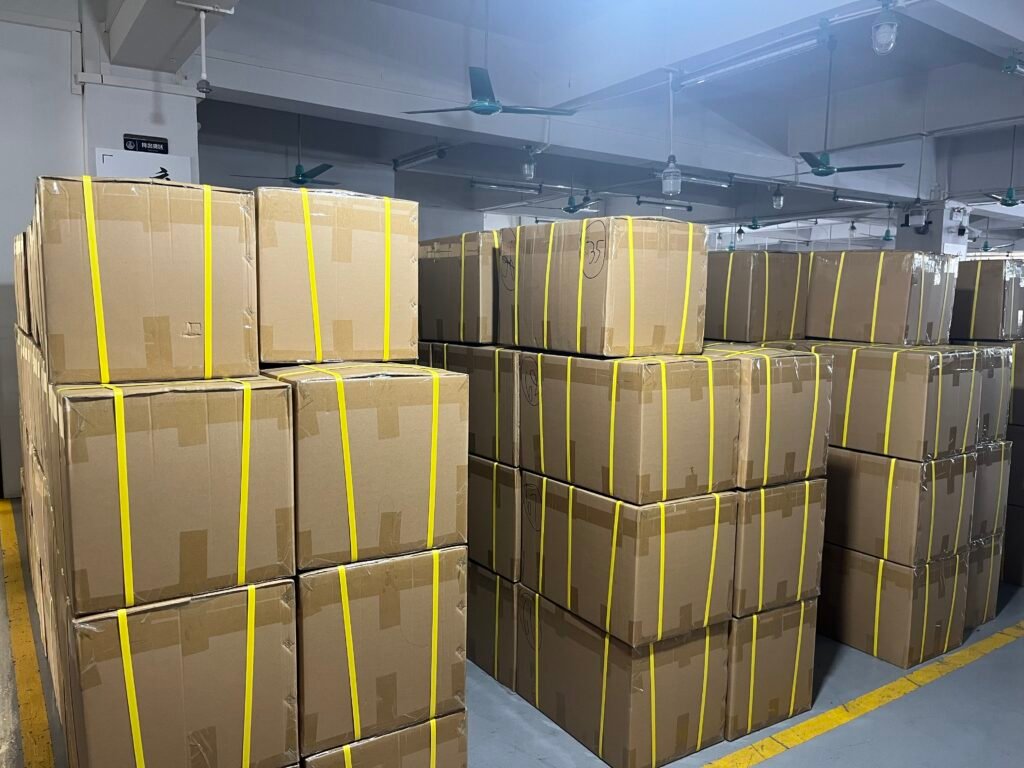
For apparel manufacturers, shipping is more than just moving boxes from point A to point B—it’s the final link in a complex supply chain that defines customer trust, on-time delivery, and brand reputation. At Seaflower Garment, our monthly production capacity of 35,000 to 40,000 pieces positions us as a reliable partner for global fashion brands. But as the calendar turns to the final quarter, our factory undergoes a dramatic transformation: every corner, hallway, and loading dock becomes stacked with shipping boxes, each filled with meticulously crafted garments bound for boutiques, department stores, and warehouses worldwide.
This year-end shipping frenzy is both a testament to our production strength and a logistical challenge that demands precision, planning, and adaptability. In this blog, we’ll dive into the dynamics of shipping at scale, the unique pressures of the year-end rush, and how we turn a factory full of boxes into seamless, on-time deliveries for our clients.
The Foundation: Shipping Capacity Rooted in Production Excellence
Shipping at scale starts long before the first box is sealed—it begins with consistent, reliable production capacity. Our ability to fulfill large orders and manage year-end surges hinges on our 35,000-40,000 monthly output, a number we’ve refined over decades through investments in technology, workforce training, and process optimization.
How Production Capacity Fuels Seamless Shipping
A monthly capacity of 35,000-40,000 pieces means we can handle bulk orders from global brands while maintaining the quality that defines our partnership with European and North American clients. But production volume alone isn’t enough—we’ve built a production-shipping synergy that ensures every garment moves from the sewing line to the shipping dock without delays.
Our production floor operates on a just-in-time (JIT) principle tailored to shipping timelines. For year-end orders, we align production schedules with vessel cut-off dates, port transit times, and customer inventory needs. This alignment means that as garments roll off the line, they’re immediately inspected, folded, packed, and sorted into shipping boxes—minimizing storage time and reducing the risk of damage or delays.
The Year-End Box Boom: A Symbol of Trust and Demand
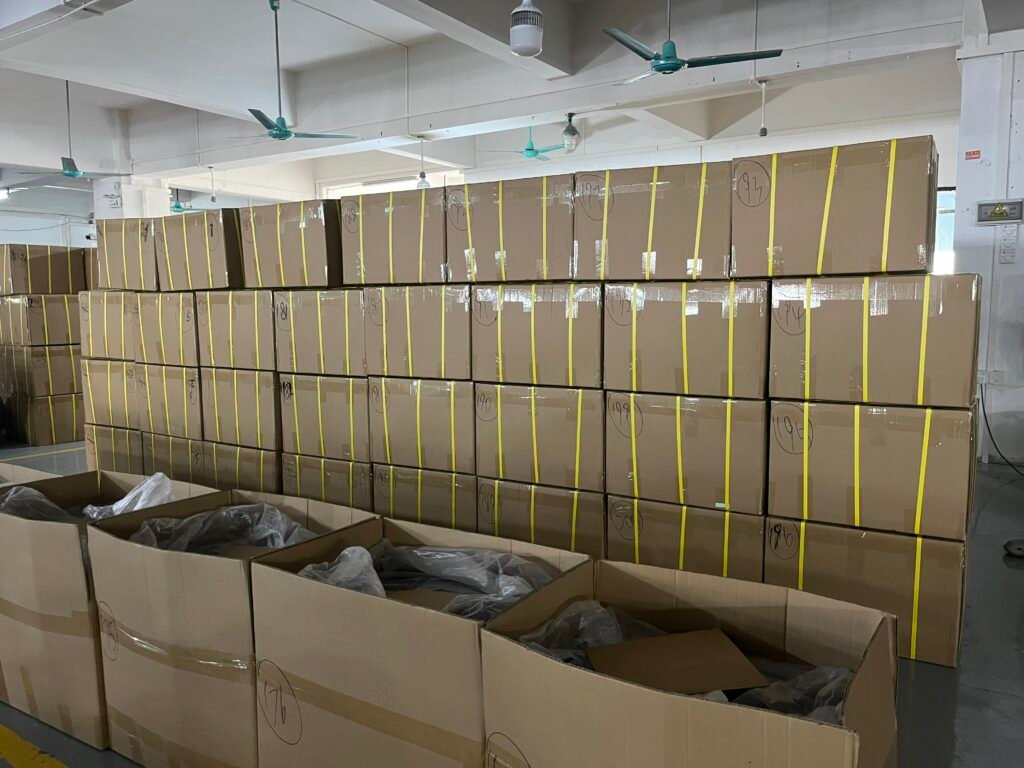
By late October, our factory begins to transform. What was once open floor space becomes a maze of stacked shipping boxes, each labeled with client names, destination ports, and order numbers. Pallets tower high, waiting for trucks to transport them to nearby ports like Shanghai or Ningbo, where they’ll be loaded onto containers bound for Europe, the US, and beyond.
This box boom is more than a logistical headache—it’s a sign of trust. Brands rely on us to deliver their holiday collections, spring previews, and core staples in time for peak shopping seasons. For us, every box represents a commitment: that the garments inside will arrive on time, in perfect condition, and ready to hit store shelves.
Navigating Year-End Shipping Challenges: Strategy and Execution
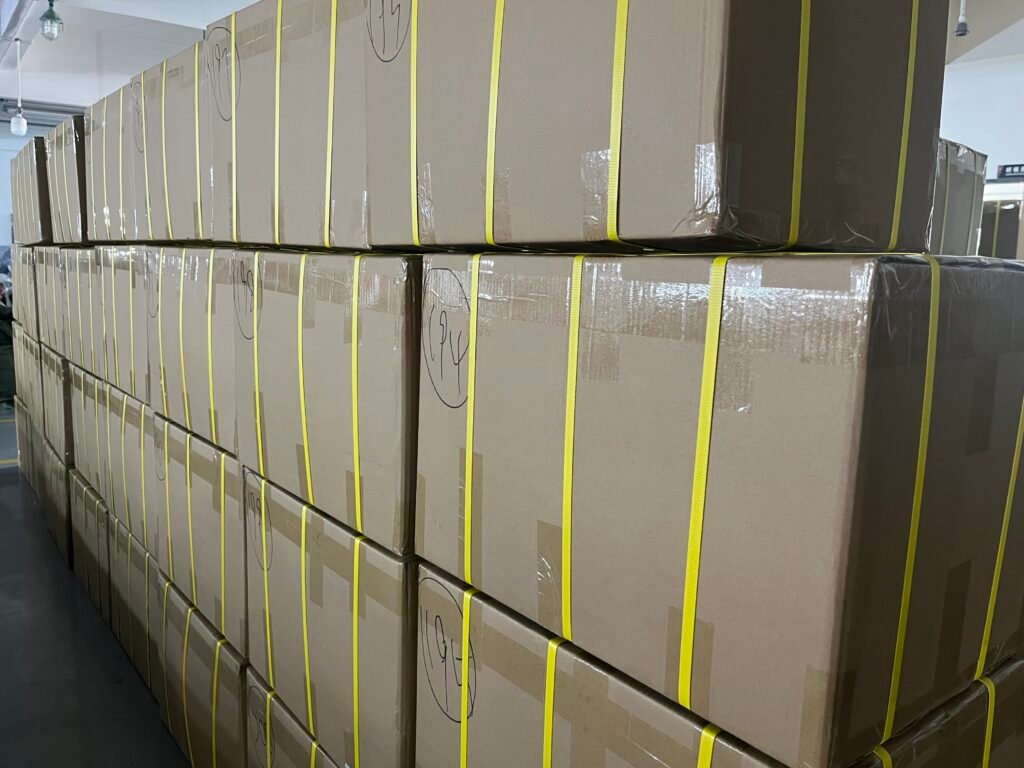
The year-end rush amplifies every shipping challenge. Port congestion, carrier delays, labor shortages, and last-minute order adjustments are common hurdles. Add to that a factory packed with boxes—each competing for space and attention—and the stakes become even higher. At Seaflower Garment, we’ve developed a multi-layered strategy to overcome these obstacles.
Proactive Planning: Beating the Rush Before It Starts
We start planning for year-end shipping in July—four months before the peak season hits. This early preparation includes three key steps:
1. Locking in Logistics Partners Early
Carriers and freight forwarders face their own surges at year-end, with prices rising and capacity shrinking. We secure contracts with trusted logistics partners by mid-summer, locking in rates and ensuring priority access to shipping containers and trucking services. This prevents us from being caught off guard by last-minute price hikes or availability issues.
2. Mapping Out Shipping Timelines for Each Client
Every client has unique shipping needs: some require air freight for urgent orders, while others opt for ocean freight to cut costs. We work with each client to map out a detailed timeline that includes production completion dates, packing deadlines, carrier pick-up times, and estimated arrival at destination ports. For ocean freight, we build in a 7-10 day buffer to account for port congestion—a critical safeguard during peak season.
3. Optimizing Warehouse and Loading Space
With boxes stacking up, space management becomes essential. We reconfigure our factory layout in early fall, designating specific zones for different clients and shipping methods. Pallets are organized by departure date, so the earliest shipments are closest to the loading dock. We also add temporary storage racks to maximize vertical space, ensuring we can handle the influx of boxes without disrupting production.
Quality Control: Protecting Garments in Transit
A boxed garment is only as good as its packaging. During the year-end rush, we double down on quality control to ensure garments arrive in pristine condition. Each shipping box is reinforced with corrugated cardboard, and garments are folded with tissue paper and packed tightly to prevent shifting during transit. For delicate items like wool blazers or silk dresses, we use custom inserts and moisture-absorbing packets to protect against wrinkles and damage.
We also conduct random box inspections before shipping, checking for correct labeling, proper packaging, and order accuracy. This extra step reduces the risk of shipping errors—critical when dealing with large orders and tight deadlines.
Agility: Adapting to Last-Minute Changes
Even the best-laid plans can go awry. A client might adjust an order, a carrier might delay a pick-up, or a port might face unexpected closures. Our team remains agile, with daily production and shipping meetings to address issues in real time. If a shipment is at risk of delay, we explore alternative routes—such as switching from ocean to air freight for a portion of the order—or negotiate priority loading with our logistics partners.
This agility is only possible because of our integrated production-shipping system. When a change occurs, our production managers, quality control team, and shipping coordinators collaborate seamlessly to adjust schedules, repack boxes, and keep the client informed every step of the way.
Beyond the Boxes: The Customer Experience of Shipping
Shipping isn’t just a logistical process—it’s a customer experience. For brands, knowing their orders are on track and will arrive on time reduces stress and allows them to focus on marketing and sales. At Seaflower Garment, we prioritize transparency to enhance this experience.
Real-Time Tracking and Communication
Once a shipment leaves our factory, we provide clients with real-time tracking information. They can monitor their containers as they move from our dock to the port, across the ocean, and to their final destination. We also send proactive updates if there are delays, along with contingency plans. This transparency builds trust and ensures clients are never in the dark about their orders.
Customized Shipping Solutions for Every Client
Every brand has unique shipping needs, and we tailor our services accordingly. For small-batch, high-end clients, we offer door-to-door shipping with white-glove service. For large-scale retailers, we provide bulk shipping with palletized loads and optimized container packing to reduce costs. We also handle all customs documentation, from commercial invoices to certificates of origin, ensuring shipments clear customs smoothly.
The Payoff: Turning Chaos Into Success
By the end of December, the boxes begin to disappear from our factory—loaded onto trucks, shipped to ports, and delivered to clients around the world. The chaos of the year-end rush gives way to satisfaction: we’ve fulfilled our commitments, helped our clients capitalize on peak shopping seasons, and demonstrated that our 35,000-40,000 monthly capacity is backed by a shipping operation that can handle the pressure.
For Seaflower Garment, shipping is more than a final step—it’s a reflection of our values. Our ability to manage a factory full of boxes at year-end, while maintaining on-time deliveries and quality, is a testament to our commitment to excellence. It’s why brands return to us year after year, knowing that when they partner with us, their orders are in capable hands—from the first stitch to the final shipment.
Ready to Ship Your Next Collection?
Whether you’re planning for the year-end rush or need a reliable partner for ongoing production and shipping, Seaflower Garment has the capacity, expertise, and strategy to deliver. With our 35,000-40,000 monthly output and a shipping operation built for scale and reliability, we’re ready to turn your designs into delivered garments—no matter the season or the challenge.
Contact us today to learn how we can support your next collection’s production and shipping needs.