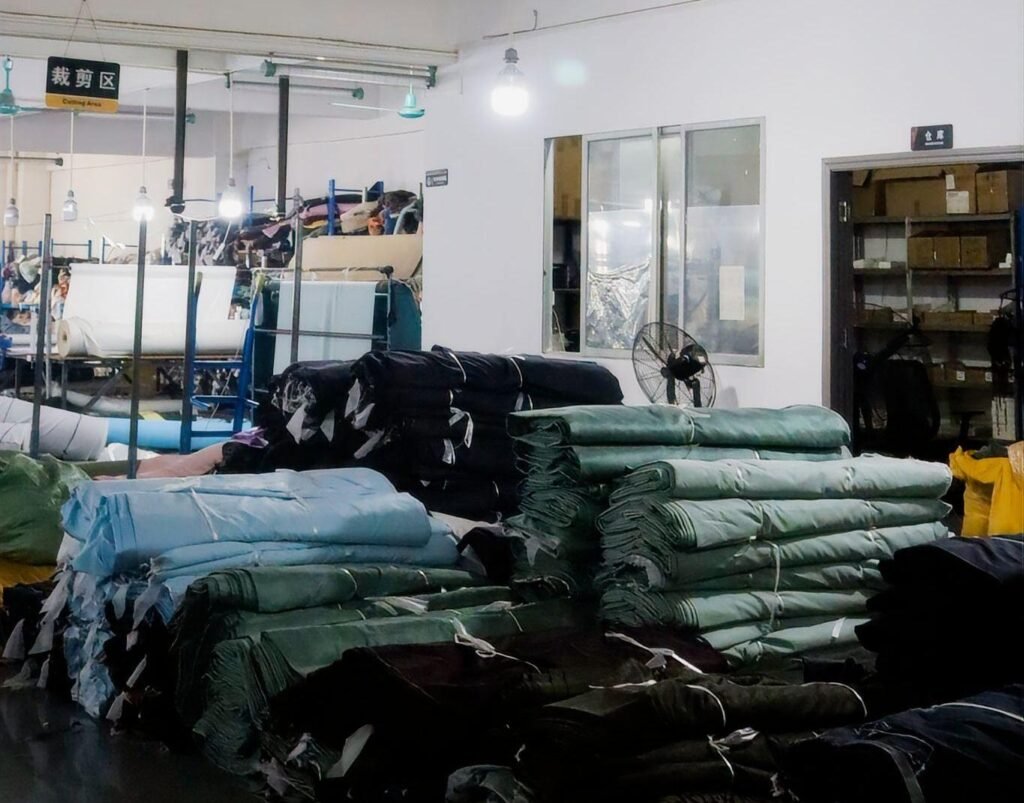
First of all, unique handmade and machine-made crafts have become the core competitiveness of modern garment factories. Embroidery, layered splicing, special textures and decorative details greatly improve product value. Meanwhile, complex processes also raise higher requirements for on-site operation and quality management. Today we focus on garment factory craft and sort out the most essential control links for elaborate clothing production.
Accurate Cutting & Pattern Matching
To start with, cutting is the first key step that decides the final craft effect. For styles with continuous patterns, stripes or full embroidery, our workers follow unified standards to arrange fabrics. We strictly control the direction and position of patterns to avoid misalignment or distortion.
Before formal cutting, the production team completes layout inspection. This practice not only keeps consistent visual performance across all products, but also reduces material loss caused by improper operation. It lays a solid foundation for subsequent sewing and craftsmanship.
Standard Sewing & Reinforced Stitching
Furthermore, neat and firm stitching is the basic guarantee of qualified factory craft. Complex designs contain many curved seams, splicing joints and decorative edges, which are easy to wear and loose after long use. We apply reinforced stitching on all stress parts.
Every stitch maintains even density and smooth lines. We prohibit skipped stitches, loose threads and messy joints in the whole production line. Standardized sewing techniques make sure all delicate details stay intact after repeated wearing and washing.
Unified Craft Standards for Mass Production
In addition, keeping consistent craftsmanship in bulk production is a big challenge for garment factories. We set clear operation rules for embroidery thread color, pattern density, decoration size and installation position.
All staff receive unified technical training and follow the same production norms. Whether it is handmade embroidery or compound splicing craft, every finished piece presents the same fineness and style. Unified standards help our factory deliver reliable products to global wholesale partners.
Rational Collocation of Fabric & Craft
Lastly, excellent craft needs proper fabric support. Our technical team matches fabrics according to different craft types. Thick embroidery requires fabrics with good toughness and bearing capacity, while multi-layer styles need materials with soft draping performance.
We never use unsuitable fabrics for complex crafts. Scientific collocation effectively prevents fabric sagging, deformation or transparency, so every craft design can show its original charm perfectly.
Strict Post-Production Inspection
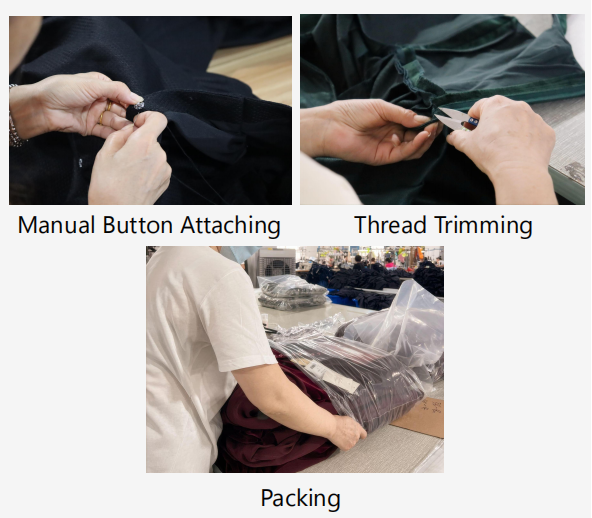
After all processes are finished, we arrange full manual inspection for craft details. Inspectors trim extra threads, adjust offset decorations and test the firmness of craft parts. We also conduct sampling washing tests to check color fastness and craft durability.
Multi-round inspection minimizes quality risks and after-sales problems for wholesale orders.
Conclusion
Garment factory craft covers every link from cutting, sewing to final inspection. Only by strict control over every detail can we make high-quality elaborate garments. If you are looking for a professional factory with mature craft technology, feel free to contact us for samples and cooperation.