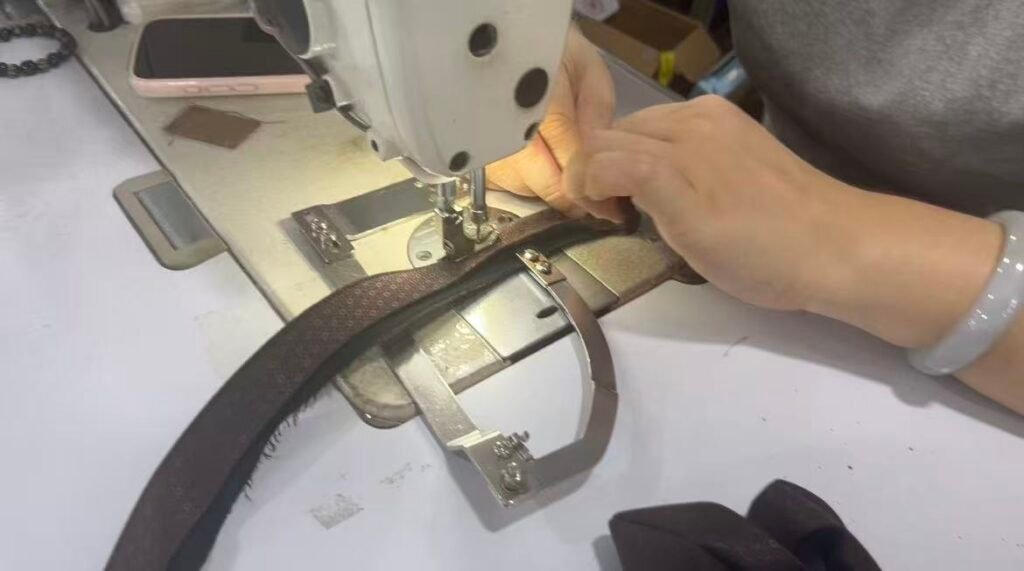
First, most overseas brand buyers judge garment quality by stitching density. SPI (stitches per inch) acts as a direct quality standard in mass production. Many small suppliers use loose 6–8 SPI stitches to speed up output, yet these rough seams split easily after washing.
As a strict garment factory, we set 12 stitches per inch as our unified standard for most women’s apparel. This article breaks down what 12 SPI means, and why this rule lifts your bulk order quality.
What Is 12 Stitches Per Inch Exactly?
To start, SPI counts how many complete stitches sit within one inch of fabric. Our 12 SPI standard means workers sew 12 even, tight stitches for every inch of seam.
We can compare three common industry levels to see the gap clearly:
- Low SPI (6–8): Long sparse stitches, cheap mass-market fast fashion, seams fray and crack after 2–3 washes.
- Medium SPI (9–11): Basic casual wear standard, balanced speed and durability for low-budget lines.
- 12 SPI (Our factory standard): Dense, compact stitch line, the entry threshold for mid-to-high-end minimalist & fashion multi-style apparel.
Why We Stick To 12 SPI For All Our Garments
1. Stronger, Wash-Resistant Seams
Besides neat appearance, 12 tight stitches lock fabric layers firmly. Thin polyester-cotton, chiffon and linen will not pucker or tear along seams during repeated laundry cycles. This fits European and Asian brands’ long-wear quality demands perfectly.
2. Smooth, Premium Visual Texture
Meanwhile, sparse long stitches leave obvious gaps on light plain fabric. The 12 SPI dense stitch line delivers flat, tidy seams without uneven gaps. It matches our minimalist and delicate fashion styles, eliminating messy rough stitching that ruins retail display looks.
3. Fit Multiple Fabric & Style Lines
On top of durability benefits, 12 SPI works for our full product range. We apply this standard on simple basic dresses, embroidered fashion skirts, soft blouses and uniform sets. No matter lightweight or medium-weight fabric, this stitch density balances flexibility and stability.
4. Unified Bulk Workmanship Across All Orders
For reference, our garment factory enforces 12 SPI on every production line. All workers follow identical machine adjustment rules. We avoid uneven stitch density between different batches, a frequent complaint from brand buyers who source from unstandardized workshops.
How We Control 12 SPI During Production
From a practical view, we lock this stitch standard via 3 strict production steps:
- Pre-production machine calibration: All sewing machines get unified SPI adjustment before bulk cutting, so every device outputs consistent 12 stitches per inch.
- Semi-finished QC spot check: Inspectors measure stitch density randomly during sewing. We rework any panel failing the 12 SPI rule before moving to next process.
- Finishing recheck: Our finishing team double-check all seams before packing, to guarantee uniform stitching on every finished garment.
Value For Fashion Brand Partners
In short, many buyers overlook SPI standards when sourcing. Loose low SPI stitching brings high return rates from end consumers. Our fixed 12 SPI rule solves this hidden quality risk entirely.
If you source minimalist and fashionable multi-style apparel from a reliable garment factory, our 12 stitches per inch production standard delivers consistent long-lasting garment quality and cuts your after-sales complaints greatly.
Cooperation Invitation
All in all, precise stitching density builds core garment quality. Our factory’s unified 12 SPI sewing standard matches mid-high-end brand standards across Northern Europe, Germany, Japan and Korea.
Reach out to our team if you need stable bulk apparel with strict unified craftsmanship. We offer custom multi-style garments with standardized 12 SPI sewing and guaranteed on-time shipment.